 Shahmardan N. Amirov1,*, Rabadan G. Magomedov2,**, Maksim Yu. Menshikov1,***, Natalia Yu. Petrova1,****, Lydia A. Gusak3,*****, Murtada Hashim4,******, Mahmud Mohsen4,*******, and Rua Saad4,********
1Institute of Archaeology RAS, Moscow, Russia
2Institute of History, Archaeology and Ethnography, DFSRC RAS, Makhachkala, Russia
3Novgorod State University, Russia
4State Board of Antiquities and Heritage, Ministry of Culture, Tourism and Antiquities, Amara, Iraq
*E-mail: shahmardan@mail.ru
**E-mail: mag-rabadan@yandex.ru
***E-mail: maxim-menshikov@yandex.ru
****E-mail: petrovanatalya7@mail.ru
*****E-mail:lika.gusak@gmail.ru
******E-mail:murtadhaalaarajy@gmail.com
*******E-mail:mhmoodmohsin330@gmail.com
********E-mail:roaa1987saad@gmail.com
Keywords: Mesopotamian alluvium, Fertile Crescent, painted pottery, Ubaid II culture, periodization of the Deh Luran Plain culture, Hazine period, Mehmeh period, Bayat period.
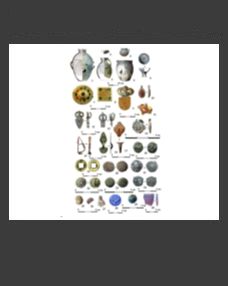
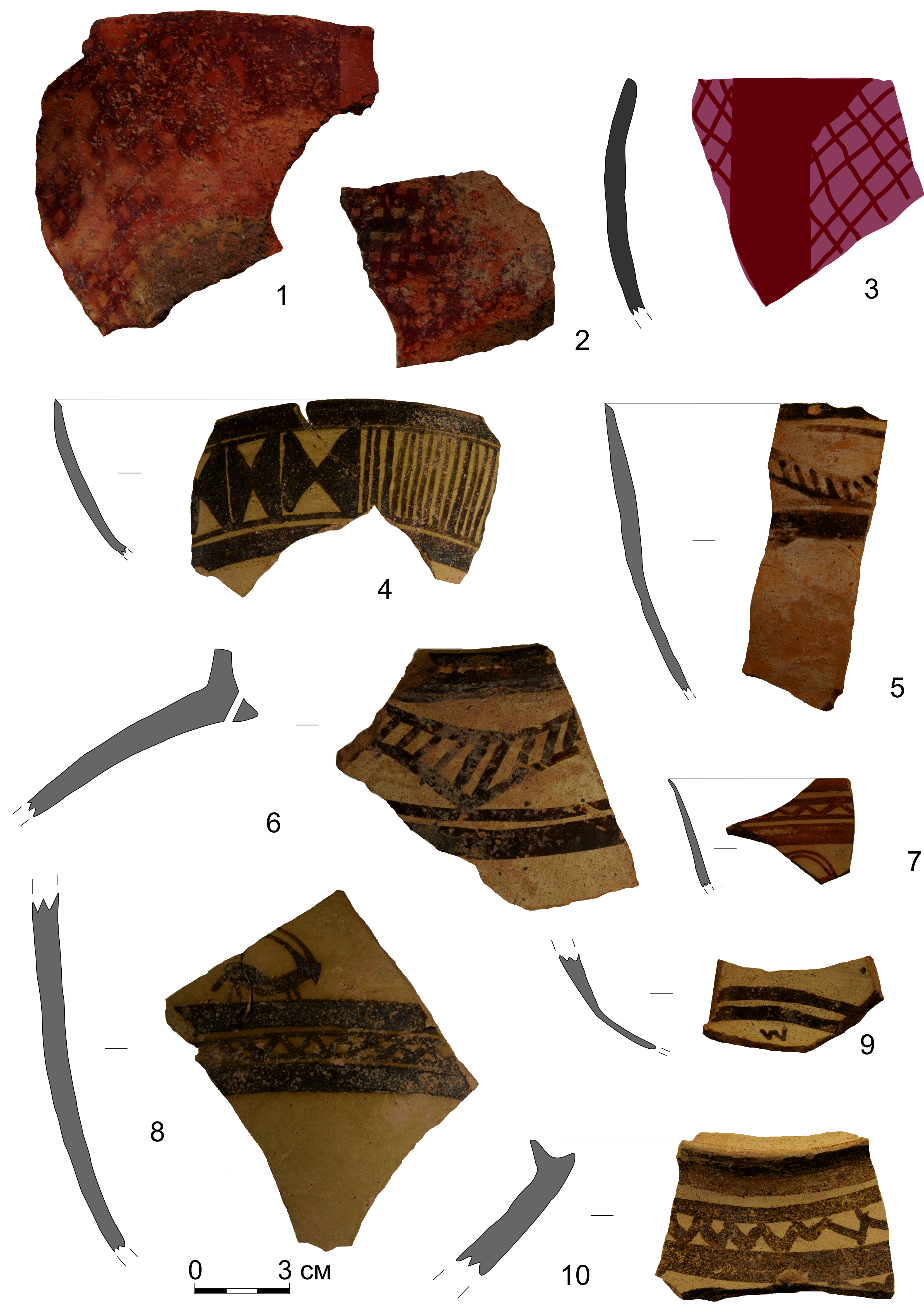
The article considers frequent and individual finds collected during the 2024 field season at the Tell Wajef settlement located in Maysan Governorate of Southern Iraq, on the border with Iran. The obtained collection makes it possible to form a preliminary idea of the material culture of the settlement during the late Neolithic and recorded historical period. Due to the proximity of the site to the Zagros Mountains, with the absolute quantitative dominance of Southern Mesopotamian pottery of the Ubaid 2 period, numerous imports from the Deh Luran Plain were also found there mainly dated to the Mehmeh period. The appearance of the material culture suggests a certain syncretism of the settlement’s culture, which distinguishes it to some extent from the synchronous settlements of the alluvial plain of Southern Mesopotamia.
DOI: 10.7868/S3034577425040015