Galina G. Korol1,*, Lyudmila V. Konkova2,**, and Sergey M. Fokin3,***
1Institute of Archaeology RAS, Moscow, Russia
2Russian State University for the Humanities, Moscow, Russia
3Krasnoyarsk Regional Museum of Local History, Krasnoyarsk, Russia
*E-mail: ggkorol08@rambler.ru
**E-mail: lkonkova@mail.ru
***E-mail: smf.kkkm@mail.ru
Keywords: Middle Yenisei, Ladeyskoye, cremation, belt ornaments made of non-ferrous metal, metal composition, decor, Middle Ages.
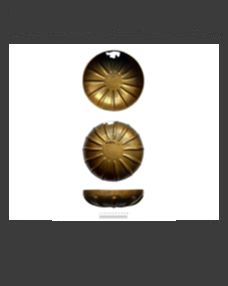
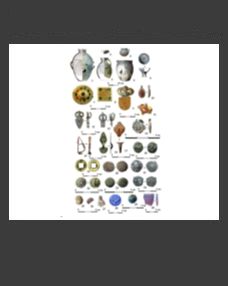
The paper considers a set of horseman’s belt decorations – non-ferrous metal items after a fire impact, with characteristic decor. A comprehensive study that involved an analysis of the decor, morphology of objects, and manufacturing technology including the composition of the metal made it possible to assume the presence of two sets (one could have been a belt). The analogies come mainly from the Minusinsk Basin of the Sayan-Altai. The homogeneity of the decor in the main groups of the assemblage and the single geochemical base of the metal evidence that items were manufactured in a production centre (possibly in different workshops) with a single stable source of metal and a high level of casting craftsmanship. The low quality of the decor (taking into account the preservation) is the result of using replicas as matrices. The latter indicates the inaccessibility of the originals in the production centre. The general appearance of the assemblage, the decor, analogies and technological features give reason to attribute it to the end of the 10th–11th century AD.
DOI: 10.31857/S0869606325030216