Roman A. Mimokhod1,2
1Institute of Archaeology RAS, Moscow, Russia,
2Institute of Physicochemical and Biological Problems of Soil Science RAS, Pushchino, Russia
E-mail: mimokhod@gmail.com
Keywords: Babino cultural circle, European migration, ritual, inventory, innovations, craniology, aridization.
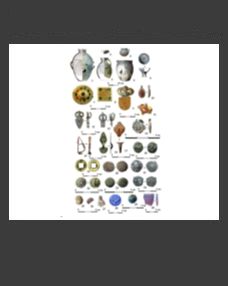
The article focuses on the reconstruction of the migration from Central Europe and the Carpathian-Danube region to the steppe in the period of 2200 cal BC. As a result of the movement of these groups to Eastern Europe, where they came into contact with local late Catacomb cultures, the Babino cultural circle was formed, which included the Volga-Don, the Dnieper-Don and the Dnieper-Prut Babino cultures. This migration is evidenced by a number of innovations of European origin in the ritual and artefact complex of post-Catacomb cultural formations in the steppe and forest-steppe zones from the Danube to the Trans-Volga region. Their emergence was explosive in nature and occurred within a short period. The migration in question occurred during a sharp climate aridization, which led to an increase in sedimentation and a decrease in winter temperatures in the mountain and foothill zones of the Alps and Carpathians. This resulted in a shortage of winter pastures in these areas, which caused part of the European population to leave for the Eastern European steppe where the conditions for winter grazing were more favorable.
DOI: 10.31857/S0869606325030056