Irina E. Zaytseva1,*, Polina V. Guryeva2,**, Ekaterina S. Kovalenko2,***, Mikhail M. Murashev 2,****, Konstantin M. Podurets2,*****, Elena Yu. Tereschenko2,******, and Ekaterina B. Yatsishina2,*******
1Institute of Archaeology RAS, Moscow, Russia
2National Research Centre “Kurchatov Institute”, Moscow, Russia
*E-mail: izaitseva@yandex.ru
**E-mail: poli.b3@gmail.com
***E-mail: kovalenko_es@mail.ru
****E-mail: mihail.mmm@inbox.ru
*****E-mail: podurets_km@nrcki.ru
******E-mail: elenatereschenko@yandex.ru
*******E-mail: yacekaterina@yandex.ru
Keywords: Rus, Veliky Novgorod, metal beads, granulation, filigree, tomography.
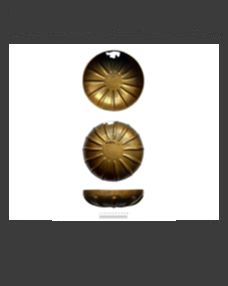
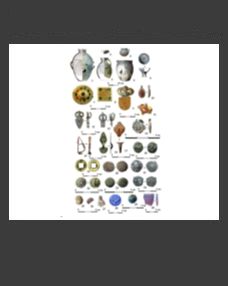
The paper examines 40 silver beads from the Vozdvizhensky hoard of the late 10th century AD from Veliky Novgorod. Cultural and chronological analysis made it possible to determine where various types of beads originate from: smooth, ribbed ones, those with granulated triangles and rhombuses, with hemispheres, with complete granulation, with volutes, openwork, and bladed ones. Moreover, the time of their existence was established. XRT and neutron tomography were used to study the design features of the ornamented beads: manufacturing methods and soldering points. The types of wires used in the decor were also clarified. The composition of the metal was determined using the energy-dispersive microanalysis method. The ornaments under study, created after international fashion of the second half of the 10th – first half of the 11th century AD, were affordable to the elites of early medieval states and demonstrated the status of their owners.
DOI: 10.7868/S3034577425040085