 Andrey E. Astafyev1,* and Evgeny S. Bogdanov2,**
¹Margulan Institute of Archaeology, Aktau, Republic of Kazakhstan
²Institute of Archaeology and Ethnography SB RAS, Novosibirsk, Russia
*E-mail: aasta@list.ru
**E-mail: bogdanov@archaeology.nsc.ru
Keywords: Ptolemy, Caspian Sea, Mangyshlak, Karakabak, Aspabota, trade and craft centre, Altynkazgan microdistrict, Caspian-Pontic waterway.
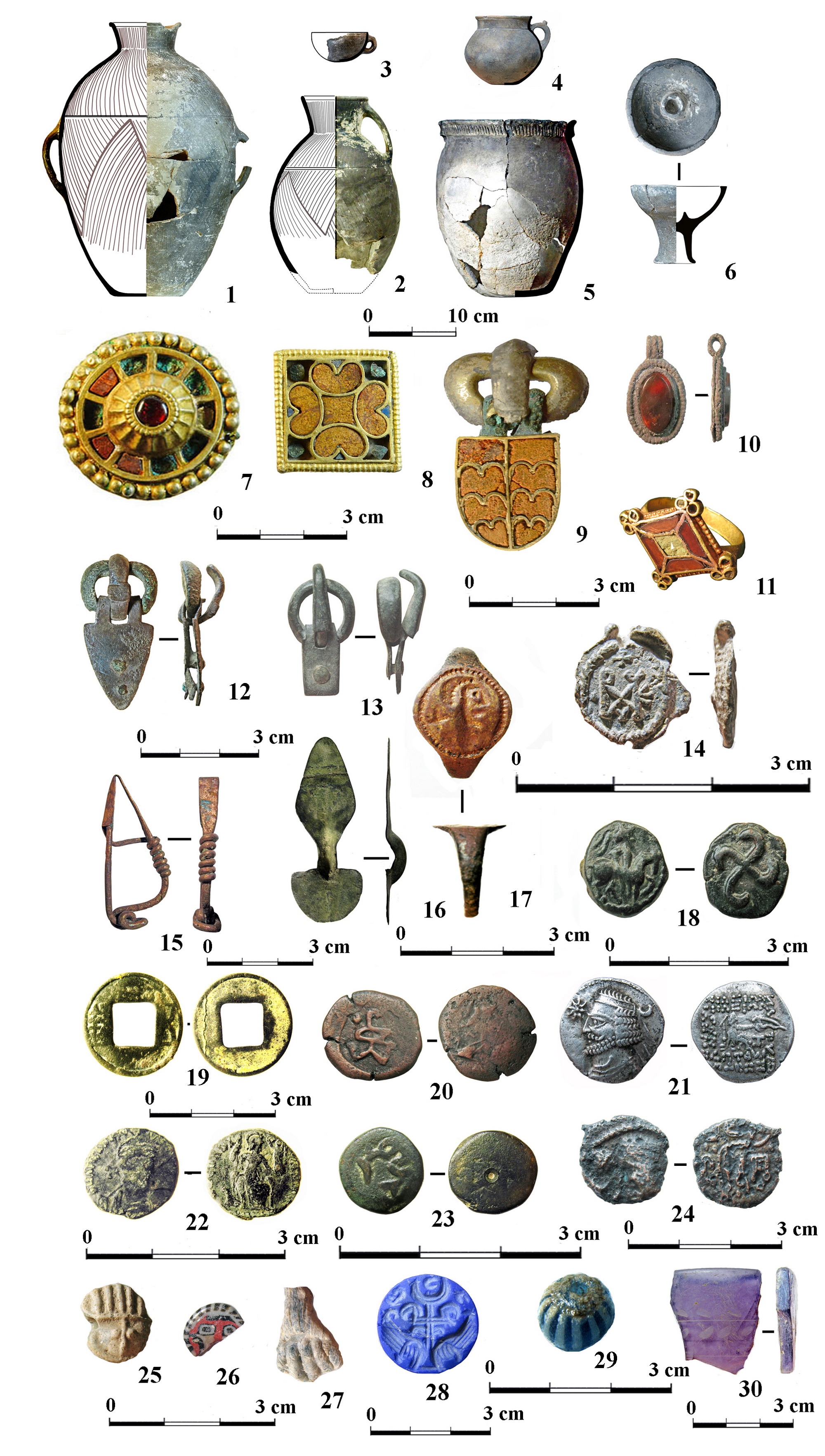
The article compares the information from Ptolemy’s Geography with the results of archaeological studies on the port and craftsmen settlement of Karakabak located on the eastern coast of the Caspian Sea (Mangyshlak Peninsula/Mangystau). The authors propose a working hypothesis that is open to refinement as new data accumulates. The urban-type settlement emerged in the 1st century AD outside the zone of traditional transcontinental trade routes, which is explained by a combination of natural, geographical, historical and cultural factors. The authors undertook the first attempt to reconstruct the complete contour of the Ptolemaic Caspian Sea with settlements, rivers and historical regions adjacent to its coasts, which was conducted based on a single scale and within the framework of a single coordinate grid. The analysis shows that Ptolemy’s data and the archaeological materials of the Eastern Caspian region do not contradict each other and form a complementary system of sources. The classical geographical tradition records stable landmarks and routes, while archaeological complexes reflect the material forms of their functioning. At the present stage of research, it is Karakabak that most closely corresponds to the complex of features of the nodal point recorded in the classical tradition. The study is the first to substantiate the key role of Aspabota in the proposed system of Caspian navigation, which is confirmed by a set of written sources and archaeological materials. The termination of the functioning of this trade and craft centre is linked to the Derbent regression, which led to a significant transformation of the coastline of the Northern Caspian Sea and climate change.
DOI: 10.7868/S3034577426030095