Aleksandr F. Shorin*, Anastasia A. Shorina**, and Aleksey P. Zykov
Institute of History and Archaeology, UB RAS, Yekaterinburg, Russia
*E-mail: shorin_af@mail.ru
**E-mail: aashor@mail.ru
Keywords: forest Trans-Urals, Makushino stage of the Yudinskoye culture, burial rite, accompanying grave goods, anthropological composition of burials.
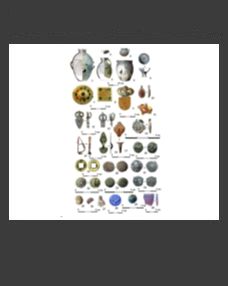
The paper introduces data on two burials and a memorial and cult structure at the Kordon Miassovo 1 cemetery located in the mountainous-forest zone of the Southern Trans-Urals. The authors analyzed burial rite, accompanying grave goods, anthropological characteristics of the skeletons, and radiocarbon dates obtained from these assemblages. Based on the data from two other published burials, the cemetery’s chronological framework was determined to range from the first quarter of the 14th to the first third of the 15th century AD. The grave goods and the specific ornamental compositions of the burial vessels allow this cemetery to be attributed to the Yudinskoye archaeological culture of the forested Trans-Urals, while the absence of a pitted zone under the rim in the pottery ornamentation corresponds to the previously identified Makushino pottery type. Ultimately, the chronological framework of the Yudinskoye culture is determined to range from the 9th to the first third of the 15th century AD. Within it, the late Makushino stage is distinguished as dated from the late 11th–12th century to the first quarter of the 14th–first third of the 15th century. The Kordon Miassovo 1 cemetery is the latest site of this phase.
DOI: 10.7868/S3034577426020112